Here is what Mantreshwar outlines (in Phaladeepika 8.10) for interpreting Mars in the 9th House:
नृपसुहृदपिद्वेष्यः (nṛpa-suhṛd api dveṣyaḥ) – “They either hate or love the king.”
The 9th House has to do with following laws, ethics, and moral principles.
Mars has to do with giving orders and commands.
These symbolisms can clash but can also work together.
Mars wants to be the order-giver, more than the order-follower. This is why it can be said, “Mars in the 9th hates the king.” This means it hates those who impose restrictions and limitations on its autonomy and freedom. It tries to break any traditions, rules, or boundaries that put any practical limitation on its ambitions (ignoring those that don’t get in its way).
But because Mars is an order-giver, it values orders and order, and is therefore capable of respecting law and order. However, it takes some influence from Jupiter or the Sun to make this happen to Mars. So, if it has some significant influence from Jupiter or the Sun, Mars in the 9th will have innate respect for tradition, morality, ethics, and law; and will want to help enforce these things in the world (usually as police, or in military service). It will still, however, be very individualistic and clear cut about which tradition, etc. it respects. In this sense, it “hates other kings.”
अतातः (atātaḥ)– “Fatherless”
The 9th House represents role-models, law-givers. Hence it impacts the typically-patriarchal aspect of family, usually embodied as fathers and grandfathers.
Mars has to do with individuality and personal freedom.
These symbolisms mostly clash with each other.
So the person with Mars in the 9th House is “fatherless.” What this really means depends on the rest of the circumstances Mars and the rest of the chart is in. It can range from being abandoned (or worse) by a self-absorbed, commitment-less father, to the early loss or separation from an otherwise dutiful and loving father, to a general lack of role-models setting healthy boundaries and instilling a sense of order in life.
It results in some corresponding amount of inability to have warm and healthy relationships with order-givers and hierarchical superiors.
It goes hand in hand with a clash between Education (a 9th House theme) and Self-reliance (a Mars theme). So, another aspect of being “Fatherless” is to feel uncomfortable being “indoctrinated” or told how to do things or how to think or feel. It manifests here as “Teacherless.” But with influence from Jupiter, this can turn into extreme fidelity to a particular role-model or teacher, often to the passionate exclusion of others.
जनघतकः (jana-ghatakaḥ) – “Leaving Society”
The 9th House represents good deeds, positive interactions with society.
Mars represents independence and freedom.
These clash.
So, the person with Mars in the 9th “leaves society.” The exact meaning depends on the circumstances in the chart. “Moving away from the herd” can involve physical distance from their homeland, it can also involve adopting foreign or otherwise non-mainstream customs, values, etc. It can also mean being shunned by, or willingly distancing oneself from social groups and teams one tried to be a part of.
Vincent Van Gogh
March 30th, 1853 at 11:00 AM Zundert, Netherlands

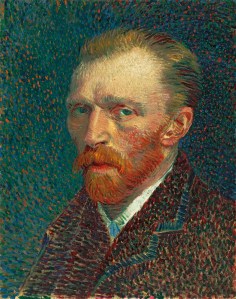
Van Gogh felt abandoned by his parents. He disliked formal education, and especially hated the rules and customs pertaining to art. He did not incorporate well into teams, groups, or society in general; was cast out from priesthood; and was unable to form a marriage.
The accuracy in “lack of father” and “aversion to rules” is largely attributable to Mars being the lord of the 10th (the house of king and father).
The accuracy in “distanced from groups” is attributable to the prominence of the 12th lord, joining the 2nd in the 10th. That this pertained even to forming a marriage is attributable to the proximity of Venus to Mars.
His religious and philosophical tendencies are discernible from his Jupiter/Moon conjunction, and from the rāja-yoga in the 9th House.
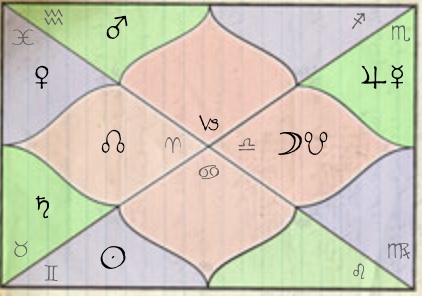
His overall depression and mental instability is visible in the Moon’s proximity to Ketu and the 6th lord.
His incredible artistic talent is hinted at by Venus being vargottama and exalted in the 9th as the 11th lord, but is really only fully disclosed by seeing his navāṁśa – where that Venus resides in the 3rd House (manual talent), as the 5th Lord (creativity), while the 3rd lord resides in the 11th House (artistic expression)
Deepak Chopra
October 22nd, 1946 at 3:45 PM New Delhi, India
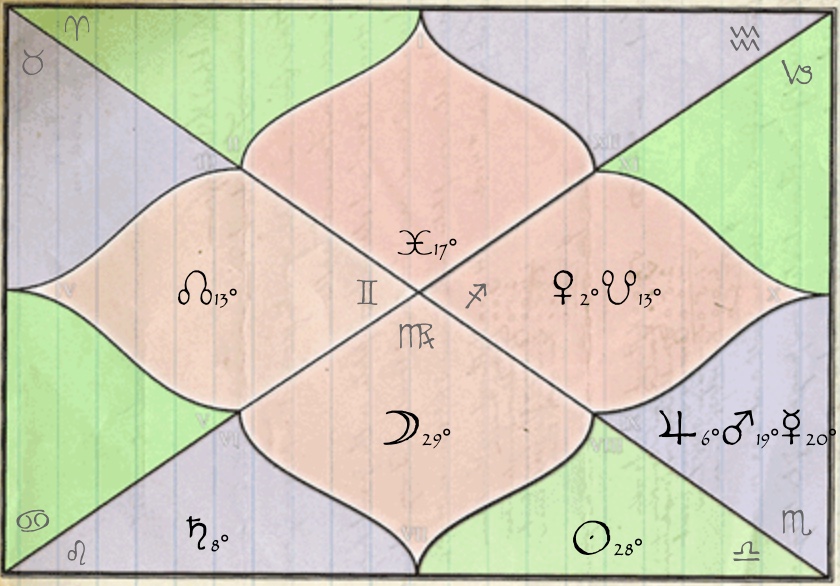

“Fatherless” and “lawless” do not seem to fit Deepak Chopra in any literal way. But all of his Mars in the 9th House implications indeed play out in terms of how he treats authorities in science and medicine. He defies them, appropriates their terminology, breaks their rules, and establishes his own versions. “Leaving the heard” clearly plays out in how the scientific and medical communities predominantly do not accept him as a valid member.
His involvement and talent with psychology is easily seen. For example:
- Mars is in Scorpio (8th sign) with Jupiter (learning) and Mercury (intellect).
- His 8th Lord joins Ketu in the 10th House, Sagittarius.
- His Moon aspects his ascendant, which is in Pisces.
His proclivity and talent in a guru role, and his tendency towards the philosophical is also easily seen by the multiple rājayoga in his 9th house. His maverick role in this things is attributable to Mars being involved in these.
Shree Krishna
Chart by Sūrdāsa tradition
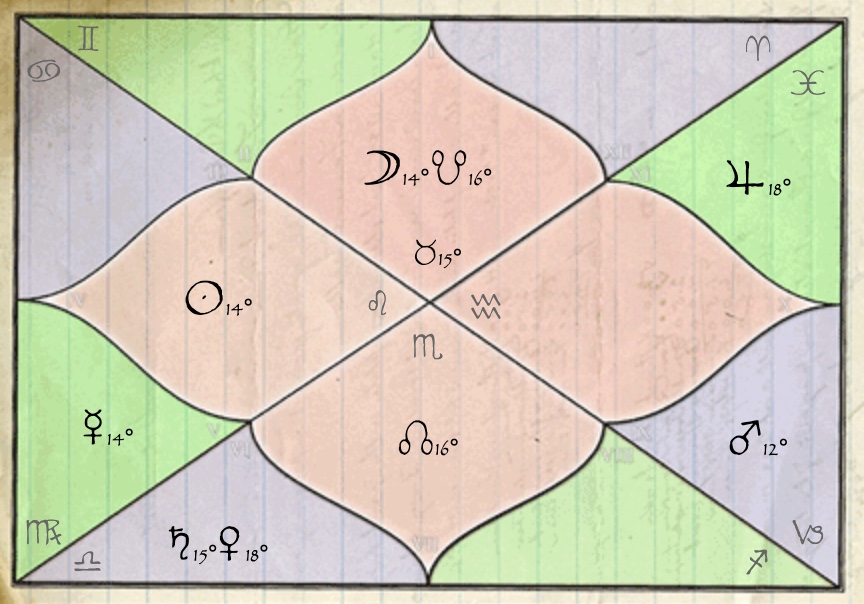

“Hating/Loving the King” – Krishna is an excellent example of someone who simultaneously establishes all rules, yet is beyond them all.
“Fatherless” – He is an excellent example, since he is the Personality of Original Consciousness, and therefore is “sarva kāraṇa kāraṇa” – the ungenerated all-generator. Also, in his avatāra-līlā, events separate him from his biological parents from birth for a full eleven years.
“Leaving the herd” – The Upanishads describe him as “nityo nityānāṁ cetanaś cetanānāṁ” – The singular eternal among plural eternals; the singular sentience among plural sentiences. He is a member of every group, every being, everything that exists, yet he cannot be contained or defined by any of them or even by the sum of all of them (pūrnasya pūrnāmādaya pūrnam evāvaśiṣyate).
The extreme extents to which all of this symbolism unfolds in Krishna’s case is discernible from the nearly unmatchable overall dignity of every planet in his chart. Mars itself is exalted in the 9th. Saturn, Mercury, and the Moon are as well, and the Moon confers this to the nodes by its tight conjunction. The remainder of planets are domicile (Jupiter), or in their root sign (Venus and Sun).


 Vic DiCara's Astrology - Radically Classical, Radically Deep
Leave a reply to avacascade Cancel reply